Berklee C.O.M.
Modulated Short Delay Effects
Fundamental Building Blocks

Input/Output
The signal in the graphic goes from left to right and splits in two parts: one undelayed (dry signal) and one delayed (wet signal).
All these are common controls on delay effects.
Any delay under 10-20ms is inaudibly separate from the original signal. Beyond 20ms our ear begins to think of the 2 signals as different sounds.
There are many varieties of delay including mono, stereo, multi-tap and slap back.
Most delay processors allow the signal to be delayed as a rhythmic time value (for ex. quarter notes). This type of delay is common in modern day music and can form an integral part of the music’s rhythm.
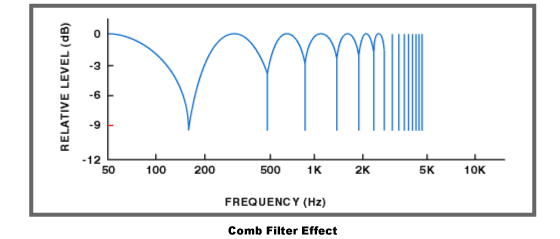
Comb Filter effect
Comb filtering creates peaks and troughs in frequency response, and is caused when signals that are identical but have phase differences — such as may result from multi-miking a drum kit — are summed. An undesirably coloured sound can result. The same effect can be harnessed deliberately to create flanging effects.
The comb filter effect can cause problems during recording as the signals reflect off surfaces.


CONCEPT of Modulated Short Delay Effects
Choruses, Phasers, Flangers, short delays,
long delays reverbs and
filters are built
from this simple block.